



A Local’s Guide
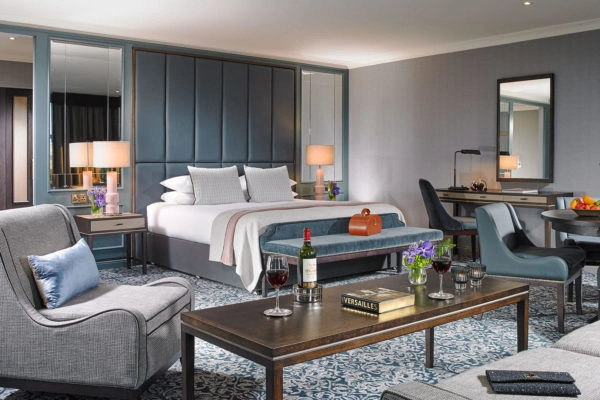
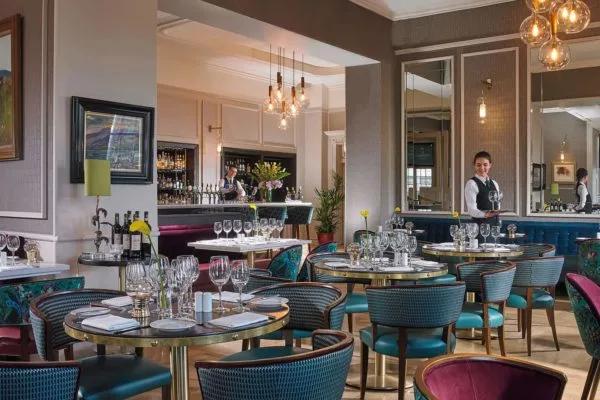
Galway city is a compact medieval gem with world-class arts, exceptional traditional music, and easy access to Connemara and the Atlantic. This guide covers the best things to do in Galway city centre, written from the perspective of a hotel that has sat on Eyre Square at the heart of the city for generations.
The Hardiman’s position means every attraction listed below is walkable or within a short car ride.

Walking Galway City: The Medieval Core
Galway’s medieval street grid is still largely intact. The best way to understand the city is to walk it. Start at Eyre Square and head south down Shop Street. Everything worth finding is within a few minutes of that route.
Eyre Square – Kennedy Memorial Park
Location: directly in front of The Hardiman Hotel · Entry: free · Open: year-round
Eyre Square, formally renamed Kennedy Memorial Park in 1965, is the civic heart of Galway city. John F. Kennedy received the Freedom of Galway here in June 1963, five months before his assassination. The square contains the Browne Doorway (a 17th-century merchant’s portal rescued from demolition), flags representing the fourteen merchant Tribes of Galway, and a rusted steel sculpture of a Galway hooker sail. It is the natural starting point for any walk through the city.
Lynch’s Castle
Location: corner of Shop Street and Abbeygate Street, 3 min walk · Entry: free (bank branch interior) · Open: Mon–Fri banking hours
Lynch’s Castle is one of the finest surviving examples of an Irish urban castle and one of the most significant medieval buildings in Galway city. This 16th-century limestone townhouse, now a bank branch, is decorated above ground floor level with gargoyles, carved heraldic panels, and decorative stonework the Lynch family used to signal their wealth and status. The interior is accessible during banking hours; most visitors walk past without realising they can enter.
Local legend: Mayor James Lynch Fitzstephen allegedly hanged his own son here in 1493 after a murder conviction, giving the English language the term ‘Lynch law’. Historians debate whether the story is true, but the plaque on the building keeps it alive.
The Hall of the Red Earl
Location: Druid Lane, off Eyre Square, 2 min walk · Entry: free · Open: Mon–Sat 9am–5pm
One of the most overlooked sites in Galway city. On Druid Lane, just off Eyre Square, the foundations of a 14th-century great hall, built by Richard de Burgh, the Red Earl of Ulster, were uncovered during a 1997 shopping centre excavation. Rather than remove them, the developers built around them. The ruins are preserved under a glass floor and are free to view. Two minutes from The Hardiman and genuinely unlike anything else in the city.
The Spanish Arch, Galway
Location: end of Quay Street, 8 min walk · Entry: free · Open: year-round
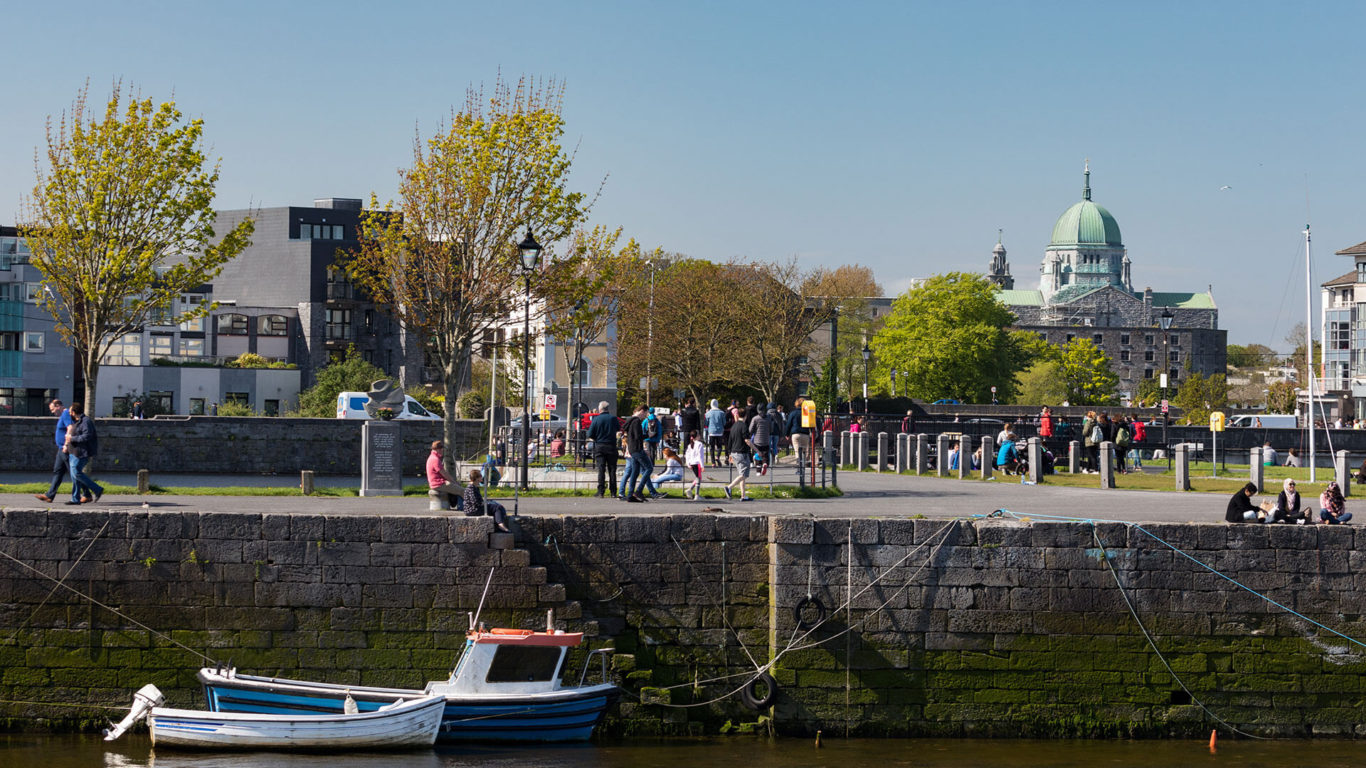
The Spanish Arch is a 1584 stone arch built as an extension of Galway’s medieval city walls, at the point where the River Corrib meets Galway Bay. It was constructed to protect merchant quays from looting. The name reflects Galway’s historic wine and fish trade with Spain. The broad stone plaza around it is one of the city’s main gathering points on warm evenings.
Cross Wolfe Tone Bridge and follow the river north along the Long Walk – a quayside path past colourful Georgian townhouses and fishing boats at Nimmo’s Pier. Twenty minutes at a stroll. Continue past the pier to join the river walk toward Galway Cathedral.
The Claddagh, Galway
Location: west of the Spanish Arch, 10 min walk · Claddagh Ring Museum: Quay Street, 8 min walk
The Claddagh is the historic fishing village that sat outside Galway’s city walls for centuries, governed by its own elected ‘king’ and operating as a largely separate community until its thatched cottages were demolished in the 1930s. The Claddagh ring originated here. The three symbols carry specific meaning: heart (love), hands (friendship), crown (loyalty). How the ring is worn signals relationship status, a tradition still followed in Galway today. The Claddagh Ring Museum on Quay Street has original examples and the full history.
Galway’s History & Architecture
St. Nicholas’s Collegiate Church, Galway
Location: Lombard Street, 5 min walk · Entry: free (donations welcome) · Open: Mon–Sat 9am–5.30pm, Sun 1pm–5pm
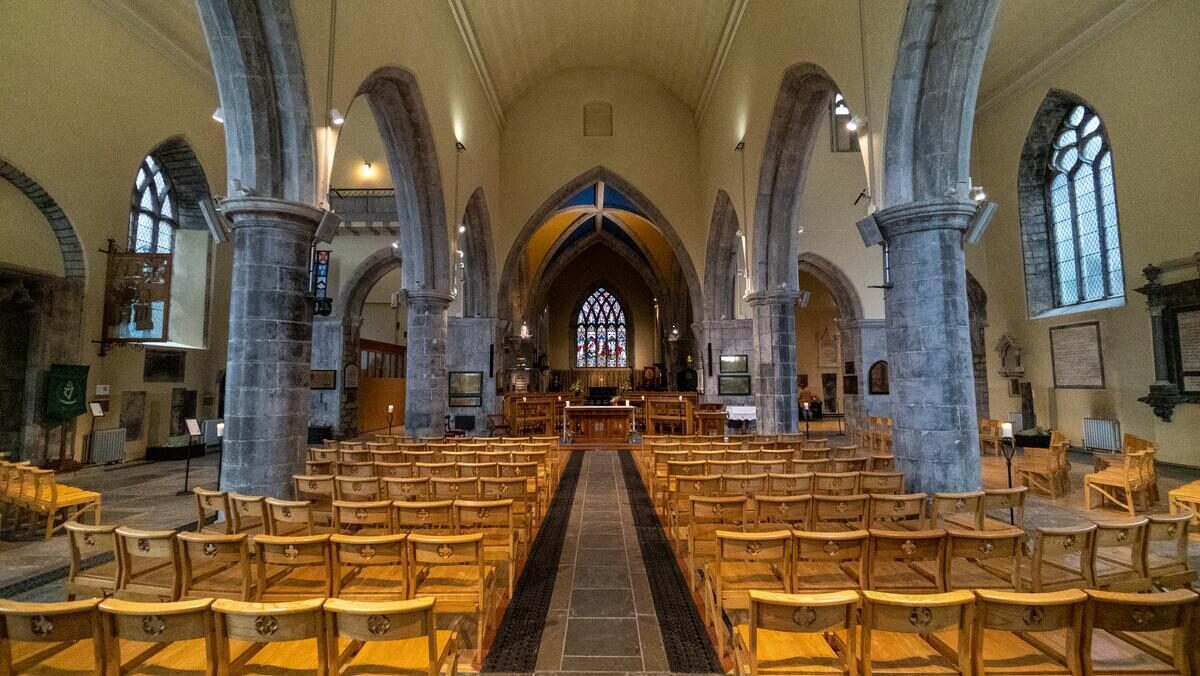
St. Nicholas’s is the largest medieval parish church still in use in Ireland, standing on Lombard Street since 1320. It predates Galway’s period of greatest commercial prosperity by 200 years. Local tradition holds that Christopher Columbus prayed here in 1477 before his Atlantic voyages, a claim treated with scepticism by some historians but commemorated by a plaque inside. The church is a working place of worship rather than a ticketed attraction.
Free multilingual guide sheets are available at the door. The carved baptismal font, the medieval grave slabs set into the floor, and the rare triple-nave layout are all worth noting.
Worth knowing: The church has been Catholic, Protestant, and Cromwellian in its 700-year history. Each phase left physical traces in the fabric of the building.
Galway City Museum
Location: Spanish Arch, 8 min walk · Entry: free · Open: Tue–Sat 10am–5pm
The Galway City Museum sits beside the Spanish Arch and is free to enter. The permanent collection covers the city’s archaeology (medieval floor tiles, coin hoards, fishing equipment), the story of the Fourteen Tribes of Galway, and the social history of the Claddagh fishing village. The temporary exhibition programme is consistently strong. The upper floors are typically quieter than the ground floor. Allow at least ninety minutes.
Nora Barnacle House
Location: Bowling Green, off High Street, 6 min walk · Admission fee · Open: mid-May to mid-Sept, Mon–Sat 10am–5pm
On Bowling Green, a narrow lane off High Street, a small terraced house carries significant literary importance. Nora Barnacle, James Joyce’s wife and, by most accounts, the central influence in his creative life, grew up here. Joyce first visited the house in 1909; the relationship had begun on 16 June 1904, the date he immortalised as Bloomsday. Now a small museum run by the Barnacle family’s descendants.
Galway Cathedral
Location: Gaol Road, 15 min walk · Entry: free (donations welcome) · Open: daily 8.30am–6.30pm
Galway Cathedral, formally the Cathedral of Our Lady Assumed into Heaven and St. Nicholas, is the most recently built of Europe’s great stone cathedrals, completed in 1965 on the site of the old county jail. The scale is significant: a limestone dome, Connemara marble floors, and figurative mosaics that divide opinion but are impossible to ignore. One mosaic depicts President Kennedy alongside the Risen Christ, a direct reference to his 1963 Galway visit. The riverside approach from the University of Galway side gives the best first view.
University of Galway – The Quadrangle
Location: University Road, 15 min walk · Entry: free · Grounds open year-round
The University of Galway’s original building, the Quadrangle, was completed in 1849 in Tudor Gothic limestone, modelled loosely on Christ Church Oxford. It is open to the public and the grounds are among the most pleasant open spaces in Galway city in summer. The university runs a year-round programme of public lectures, concerts and exhibitions.
Galway Arts & Culture
Galway has a strong arts presence for a city of its size. It is home to one of the world’s great regional theatre companies, Ireland’s only national Irish-language theatre, and a festival calendar that draws international audiences every summer.
Druid Theatre, Galway
Location: Mick Lally Theatre, Flood Street, 6 min walk
Druid Theatre was founded in Galway in 1975 by Garry Hynes, Mick Lally and Marie Mullen. It became one of the defining theatre companies in the English-speaking world with Hynes being the first woman to win a Tony Award for direction. Productions sell out quickly and tour internationally, but seeing a performance at the intimate Mick Lally Theatre on Flood Street, their home venue in Galway, is a different experience.
Town Hall Theatre, Galway
Location: Courthouse Square, 4 min walk
Town Hall Theatre is Galway’s main civic performance venue and the anchor for most of the city’s major festivals. The building, a former town hall, has a genuine atmosphere that purpose-built venues rarely achieve. It hosts a year-round programme of theatre, music and comedy beyond the festival season.
An Taibhdhearc – Ireland’s National Irish Language Theatre
Location: Middle Street, 5 min walk
An Taibhdhearc (pronounced ‘on tiv-yark’) has staged performances in Irish since 1928, making it the oldest Irish-language theatre in continuous operation in the world. Productions regularly incorporate music, dance and visual spectacle that communicate effectively without requiring knowledge of the language. Siobn McKenna gave some of her legendary early performances here in the 1940s.
Galway Arts Centre
Location: 47 Dominick Street, 7 min walk · Entry: free
Galway Arts Centre runs a rolling programme of visual art, literature events and live performance. Gallery entry is free. The programming focuses on Irish and West of Ireland artists without being parochial in scope.
Traditional Music & Pubs in Galway
Galway comes alive after dark. Musicians arrive, others join, and by ten o’clock something genuinely special is often happening in a pub. Visitors who find their way in are invariably made to feel at home.
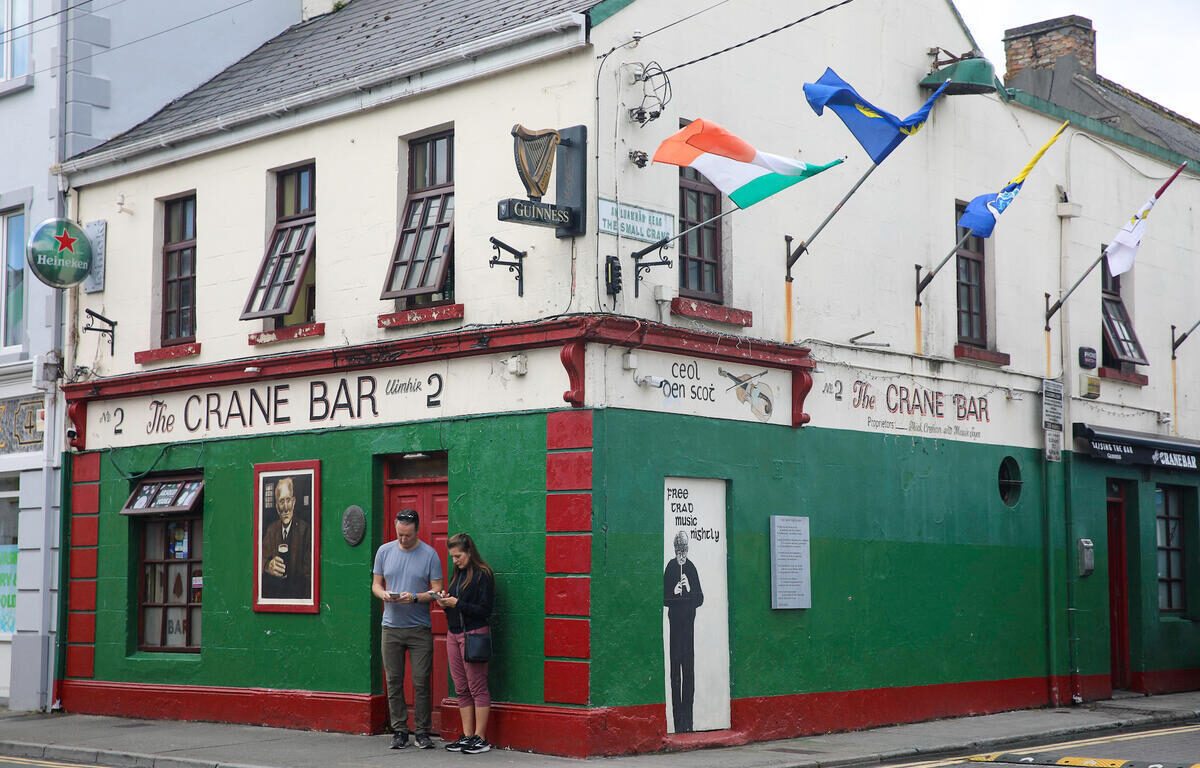
The Crane Bar
Location: 2 Sea Road, 15 min walk from The Hardiman · Sessions: 7 nights a week from approx. 9.30pm
The Crane Bar on Sea Road is the pub that Galway’s traditional musicians actually go to. Trad sessions run upstairs and down, seven nights a week, at a consistently high standard. It is a fifteen-minute walk from The Hardiman or a short taxi.
Practical note: Arrive by 9pm if you want a seat upstairs for the main session. The downstairs bar has its own music and fills earlier.
Tigh Neachtain
Location: 17 Cross Street, 6 min walk · Est. 1894
Tigh Neachtain (pronounced ‘Nack-tins’) on the corner of Cross Street and Quay Street has been in operation since 1894 and has retained its original character. Timber panelling, small interconnecting rooms, and a courtyard that offers outdoor seating on a fine day. Music here tends to happen spontaneously rather than on a fixed schedule.
Tig Chóilí & Garavan’s
Tig Chóilí: Mainguard Street, 4 min walk · Garavan’s: Eyre Street, 3 min walk
Tig Chóilí on Mainguard Street runs two traditional music sessions daily. Garavan’s on Eyre Street has one of the best whiskey selections in Galway and a consistently well-kept Guinness. Five minutes apart, a natural circuit for any evening.
Galway's River
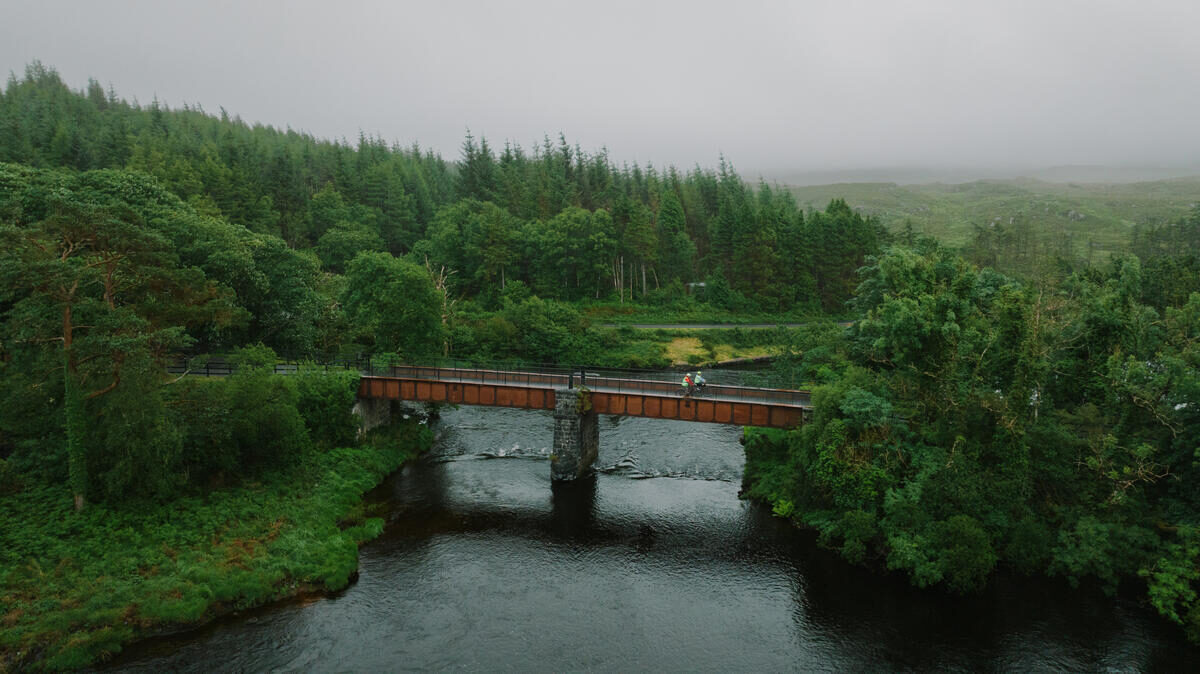
Salmon Weir Bridge & the River Corrib Walk
Location: Salmon Weir Bridge, 12 min walk · Entry: free
The River Corrib runs through Galway city for just three miles before meeting the bay, one of the shortest major rivers in Europe. The riverside walk from Galway Cathedral south to the Spanish Arch takes around twenty minutes and covers the full character of the river. In summer, Atlantic salmon run upstream in numbers that still surprise people who stop on Salmon Weir Bridge and look down into the clear water.
Corrib Princess River Cruise
Location: departs Woodquay, 10 min walk · Paid admission · Seasonal
The Corrib Princess runs ninety-minute cruises from Woodquay through the city and into the lower reaches of Lough Corrib, Ireland’s second-largest lake. The perspective of Galway city from the water is one most visitors never experience.
Galway’s Saturday Market
Location: behind St. Nicholas’s Church, Church Lane, 5 min walk · Sat 8am–6pm, Sun 12pm–6pm, Bank Holidays 8am–6pm · Entry: free
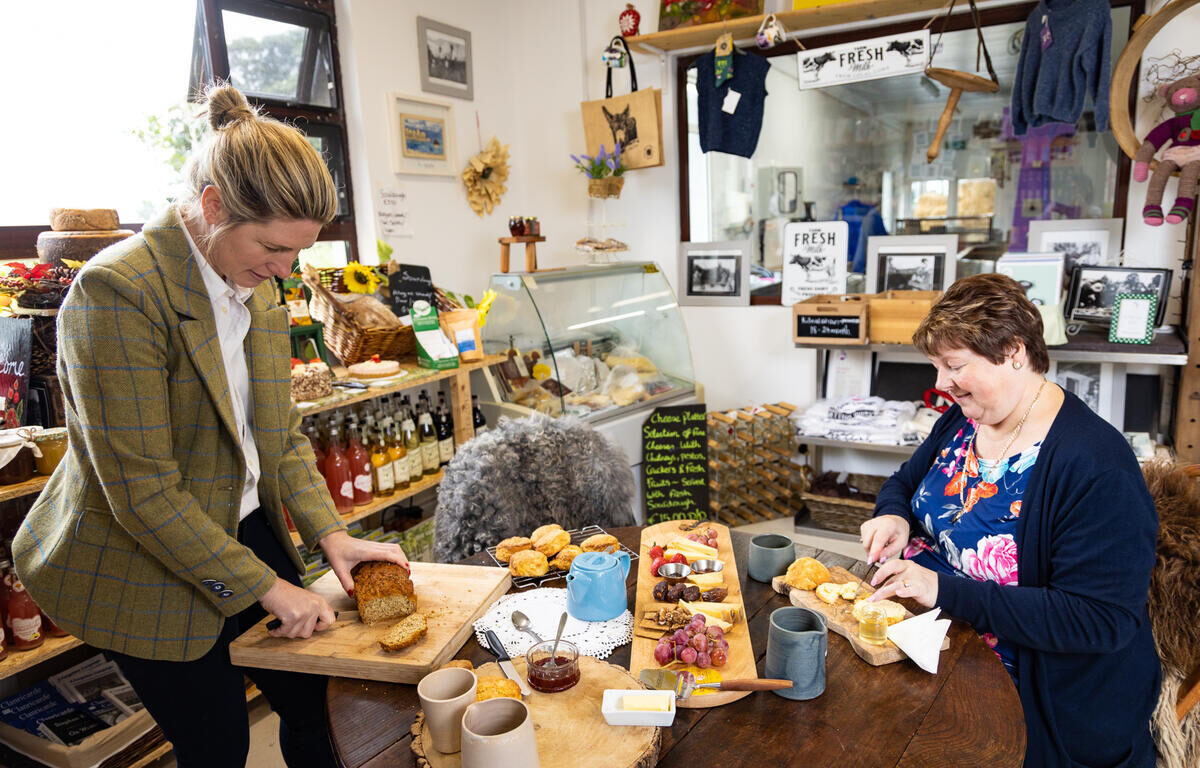
The Galway Saturday Market has operated behind St. Nicholas’s Collegiate Church since the early 1980s and is one of the best food markets in Ireland. Food on offer includes:
– Sourdough from producers who have held the same pitch for twenty years
– West of Ireland shellfish – oysters, crab, smoked salmon
– Organic vegetables from Connemara growers
– French crêpes, Indian street food, and artisan cheese from across the west
Timing: Arrive before 11am on Saturday for the full selection. The market also runs on Sundays from noon, with a slightly smaller food offer.
Festivals & Events
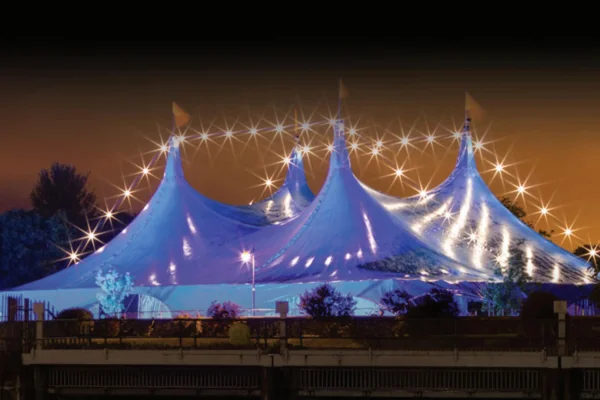
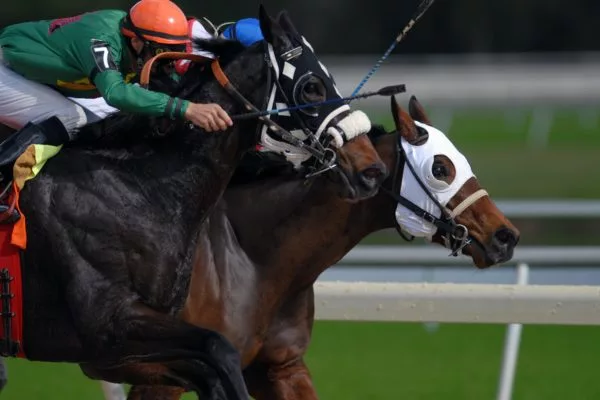
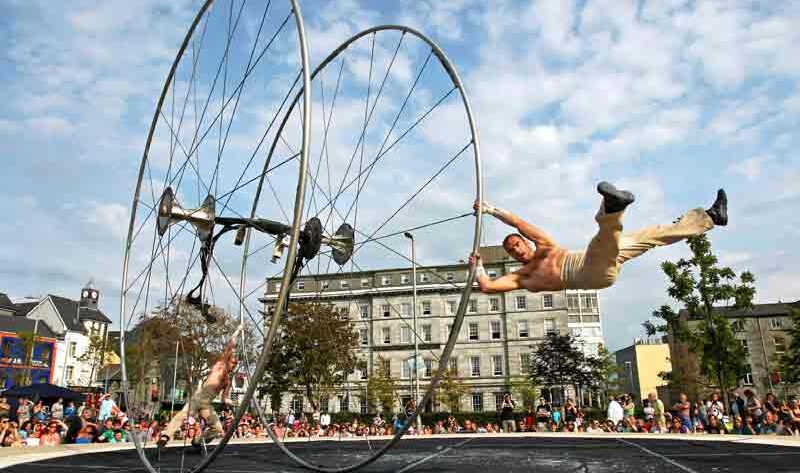
Galway's 2026 festival calendar is one of Ireland's finest. From the International Arts Festival and Film Fleadh to the Galway Races and the Christmas Market.
View Details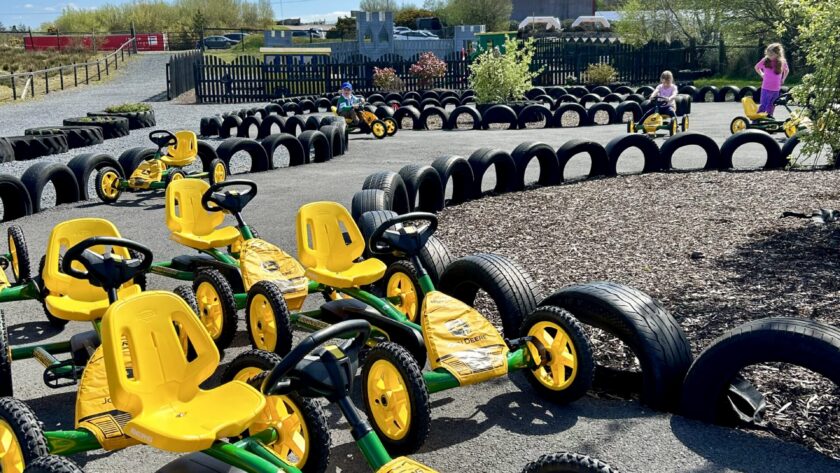
Activities for Kids
Galway is a great city for families. The Saturday Market, the River Corrib, and easy access to Connemara and the Atlantic coast mean genuine variety without long drives.
View DetailsFAQ Section
Is Galway city easy to explore on foot?
Yes. Galway’s medieval city centre is compact enough to cross in twenty minutes on foot. The main attractions; Eyre Square, Shop Street, the Spanish Arch, Galway City Museum, St. Nicholas’s Church, the Long Walk, and the River Corrib are all within ten to fifteen minutes of each other. The Hardiman Hotel sits on Eyre Square, placing guests at the centre of the walkable city.
What is Galway famous for?
Galway is famous for its traditional Irish music, medieval architecture, the Claddagh ring, the Galway Races, and its position as the gateway to Connemara and the Aran Islands. It is also known as a festival city, hosting major annual events including the Galway Arts Festival, Galway Film Fleadh, and Cúirt International Festival of Literature.
What is the best pub for traditional music in Galway?
The Crane Bar on Sea Road is widely regarded as one of the best venues for traditional Irish music in Galway. It hosts live trad sessions seven nights a week, with a consistently high standard of musicianship. Sessions typically begin around 9.30pm. It is a fifteen-minute walk from Eyre Square or a short taxi ride.
How long do you need in Galway city?
Two full days is enough to cover the main Galway city attractions comfortably including the medieval streets, Spanish Arch, Galway Cathedral, St. Nicholas’s Church, the City Museum, and the Saturday Market. A third day allows for a day trip to Connemara or the Aran Islands.
Where is The Hardiman Hotel in Galway?
The Hardiman Hotel is located on Eyre Square in Galway city centre. The hotel overlooks Kennedy Memorial Park and is within walking distance of all the city’s main attractions, the Saturday Market, the Latin Quarter, and the River Corrib. The hotel is approximately fifteen minutes by road from Galway Airport and just over two hours from Dublin by train or road.